Professional Bar Ice Scoops Ensuring Health Code Compliance in Ice Bin Management
Why Ice Safety Matters in Commercial Bar Management
Bar managers often prioritize spirits, taps, and glassware while underestimating ice sanitation. However, contaminated ice can harbor dangerous pathogens, including E. coli, Norovirus, and Salmonella. Health inspectors frequently audit ice bins, scoop storage, and handling habits during routine inspections.
To avoid health violations and severe fines, commercial venues must establish strict operational standards. Maintaining clean equipment guarantees that your beverages remain safe, crisp, and high-quality for every guest.
Key Features of Code-Compliant Professional Bar Ice Scoops
Not all ice scoops meet commercial health code requirements. Standard household plastic utensils or temporary solutions lack essential safety features. A code-compliant commercial ice scoop must provide specific design benefits:
- Dedicated Hand Guards: Built-in knuckle guards prevent bare hands and fingers from coming into direct contact with the ice supply.
- NSF Certification: National Sanitation Foundation (NSF) certified materials ensure non-porous surfaces that resist bacterial growth.
- Ergonomic Handles: Durable non-slip handles allow bartenders to scoop rapidly without dropping the tool into the bin.
- Durable Material Construction: Heavy-duty polycarbonate or high-grade stainless steel scoops resist chipping, breaking, or corroding.
Best Practices for Ice Bin Management and Scoop Storage
Owning the right equipment is only half the battle; proper day-to-day ice bin management ensures full health code compliance. Implementing clear protocol protects your bar from cross-contamination.
1. Never Store Scoops Inside the Ice Bin
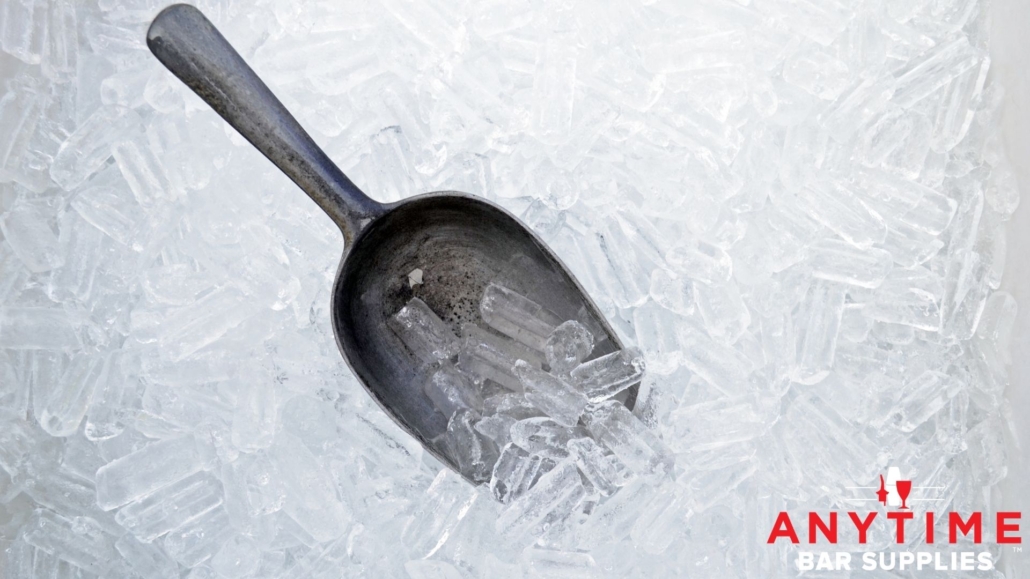
Leaving an ice scoop resting inside the ice bin is one of the most common health code violations. When the handle rests against the ice, bacteria from a bartender’s hands transfers directly into the customer’s drink. Always utilize an external, clean holster or dedicated wall-mounted holder.
2. Prohibit Using Glassware to Scoop Ice
Using a glass to scoop ice from the bin is a severe safety hazard. Glass can easily chip or shatter unnoticed inside the ice bin. If this happens, the entire bin must be burned (melted), sanitized, and refilled, causing lost revenue and wasted time during busy service hours.
3. Establish Daily Cleaning Schedules
Ice scoops and holders should be washed, rinsed, and sanitized at the end of every shift or at least once daily. Regularly clean the main ice machine and underbar ice bins to prevent mold and biofilm buildup.
Upgrade Your Bar Supplies with Anytime Bar Supplies
Ensuring compliance does not need to be complicated. At Anytime Bar Supplies, we provide premium, commercial-grade bar tools designed to streamline your service while adhering to strict local and national health standards. Explore our selection of NSF-certified professional bar ice scoops, holders, and sanitization equipment today to safeguard your establishment.
Frequently Asked Questions (FAQ)
Can you leave an ice scoop inside the ice bin?
No, leaving an ice scoop inside the ice bin is a health code violation. The scoop’s handle can transfer bacteria from bartenders’ hands directly to the clean ice. Store scoops in a clean external holder instead.
What materials are best for commercial bar ice scoops?
Polycarbonate and high-grade stainless steel are the best materials. Both options are non-porous, highly durable, dishwasher safe, and typically NSF-certified for food safety.
Why is using a glass to scoop ice dangerous in a bar?
Using glassware to scoop ice creates a risk of broken glass inside the bin. If a glass chips or shatters, the entire ice bin must be completely melted, cleaned, and sanitized before it can be used again.