The Science of the Perfect Emulsion: Why a Slow Pour Changes Your Dressings
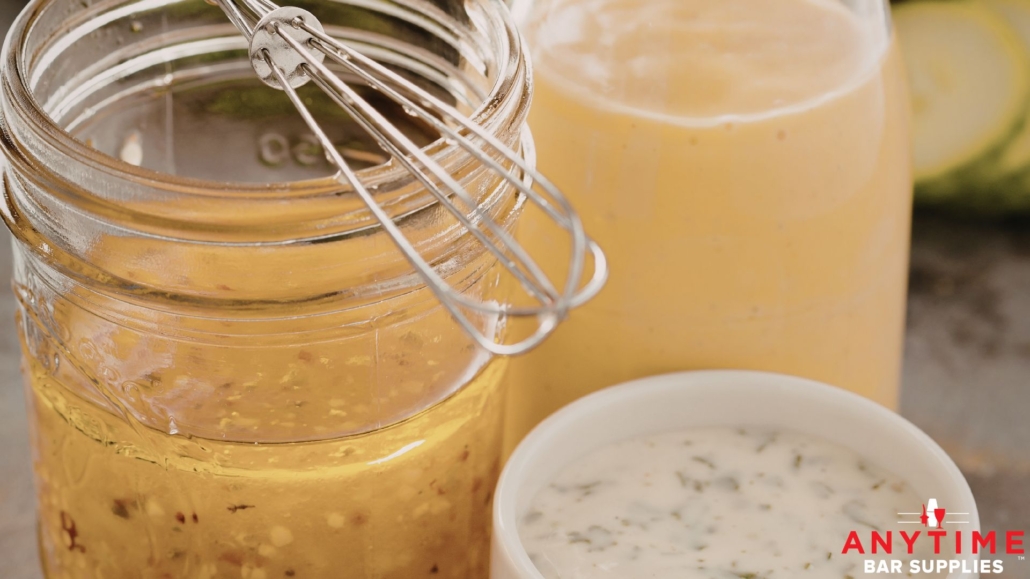
Whether you are a professional chef, a craft bartender, or a home enthusiast, you’ve likely encountered a “broken” sauce or a separated vinaigrette. It’s unappealing, greasy, and lacks the velvety mouthfeel of a professional preparation.
At Anytime Bar Supplies, we believe the best results come from a blend of quality tools and proper technique. Today, we’re diving into the physics of the “slow pour” and why speed is the enemy of a perfect emulsion.
What is an Emulsion?
An emulsion is a mixture of two liquids that would normally stay separate—like oil and water (or vinegar). Because these liquids are “immiscible,” they need a little help to stay together. This help comes in two forms: an emulsifier (like mustard, egg yolk, or honey) and kinetic energy (whisking or shaking).
The Physics of the “Slow Pour”
When you create a dressing, you are essentially trying to break one liquid into millions of microscopic droplets and suspend them within the other liquid.
If you dump all the oil into your vinegar at once, the oil molecules find each other too easily. They coalesce into large “globs,” leading to a greasy, separated mess. However, when you utilize a slow pour, you are controlling the population of oil droplets.
By adding the oil drop-by-drop or in a very thin stream, you allow your whisking or blending tool to surround each tiny oil droplet with the continuous phase (the vinegar/emulsifier) before the next drop arrives. This creates a dense, stable matrix of droplets that cannot easily merge back together.
Why Your Tools Matter
The stability of your emulsion depends on the “shear force” you can create. In a bar setting, using a high-quality Boston Shaker or a precise pour spout allows for the control necessary to integrate fats (like cream or egg whites) into acidic components.
Benefits of a Stable Emulsion:
- Improved Flavor Distribution: The fats carry flavors across the palate more evenly.
- Texture: A slow-poured emulsion creates a creamy, luxurious mouthfeel without adding extra fat.
- Shelf Life: A properly emulsified dressing will stay integrated in the fridge much longer than one that was rushed.
 Perfect Emulsion
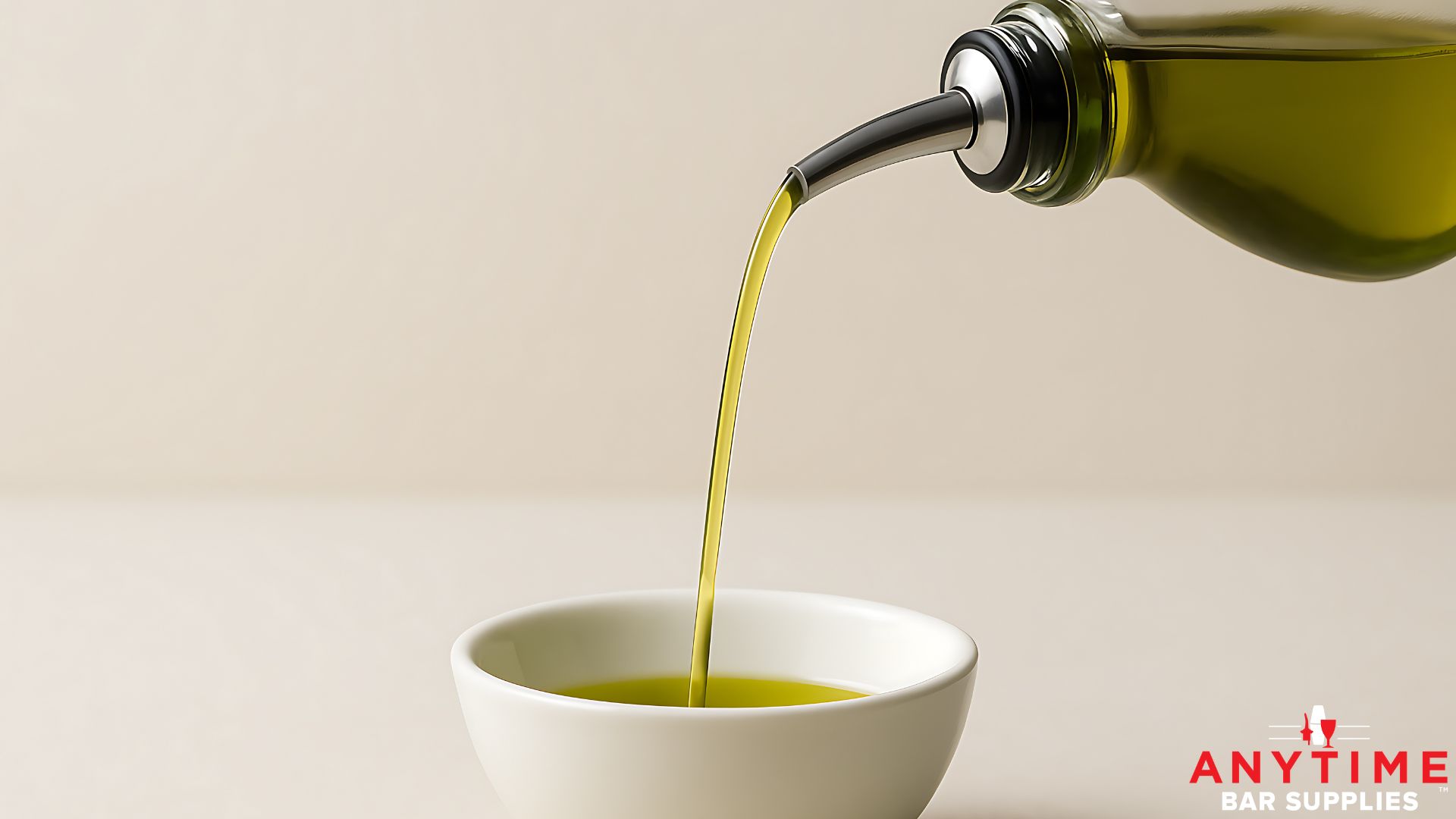 Perfect Emulsion
Patience is a technical ingredient. By slowing down your pour, you give the chemistry of your ingredients time to work. The next time you’re prepping a signature house vinaigrette or a complex egg-white cocktail, remember: the slower the pour, the stronger the bond.
FAQ
Q: What is the most common emulsifier for dressings?
A: Dijon mustard and egg yolks are the most common. They contain molecules that are attracted to both water and oil, acting as a “glue” between the two.
Q: Can I fix a broken emulsion?
A: Yes! Start with a teaspoon of water or lemon juice in a clean bowl, and very slowly whisk your broken mixture into it, one drop at a time.
Q: Does temperature affect emulsions?
A: Absolutely. Room temperature ingredients generally emulsify more easily than cold ones, as the fats are more fluid and easier to break into smaller droplets.